Detail Article
Air-Cooled vs Water-Cooled Diesel Engines: Which One Fits Your Needs?
10 April, 2026
In sectors like mining, agriculture, construction, manufacturing, and small-scale industries, diesel engines are a primary power source for driving a wide range of equipment. Diesel engines are known for their high power, strong torque, and durability over long-term use. However, not all diesel engines are the same. Many users assume all diesel engines work alike, but there are key differences in their components—most notably, the cooling system.
The cooling system plays a crucial role in maintaining engine temperature and performance. Diesel engines are generally classified into two types based on their cooling system: air-cooled and water-cooled engines. Understanding the differences between the two helps users choose the diesel engine best suited for their operational needs and working conditions.
Technically, diesel engines convert diesel fuel into mechanical energy through high-pressure combustion. This process generates significant heat, making the cooling system essential to keeping the engine temperature stable. The primary difference between air-cooled and water-cooled diesel engines lies in how they dissipate the heat produced during combustion.
Air-Cooled Diesel Engines
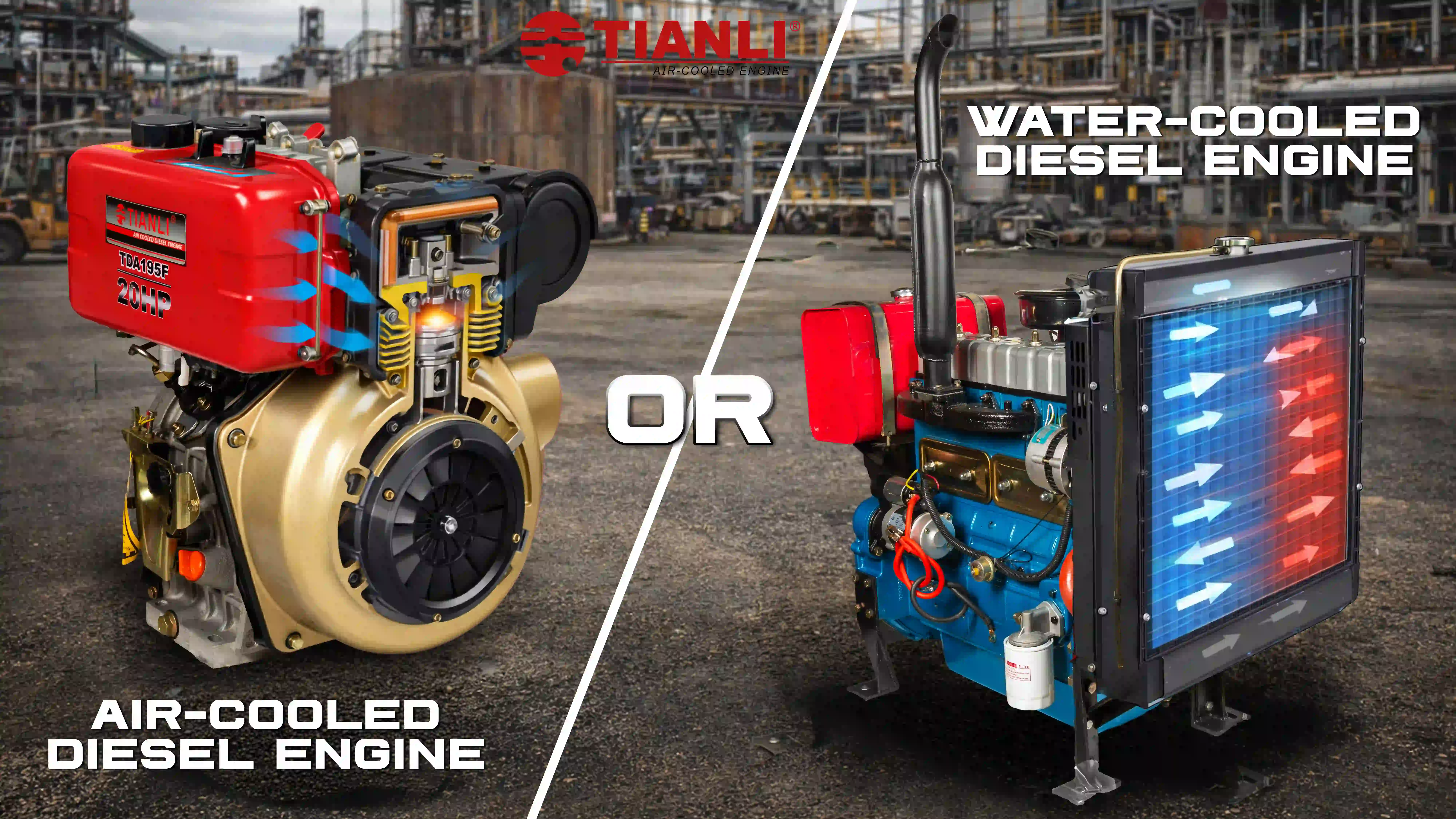
Air-cooled diesel engines use airflow as the primary method for cooling. Heat is released through cooling fins on the engine components, assisted by fans and natural air circulation while the engine operates. Air-cooled engines are simpler in design because they do not require a radiator or coolant. This makes them ideal for demanding, open, and mobile environments such as agriculture, mining, construction projects, and remote areas with limited access to clean water.
Advantages of air-cooled engines include easier and more practical maintenance, no risk of radiator or coolant leaks, and durability in extreme field conditions. However, they rely heavily on unobstructed airflow. If the cooling fins are blocked by dirt or debris, engine overheating becomes a greater risk.
Water-Cooled Diesel Engines
In contrast, water-cooled diesel engines use a circulating coolant (water or antifreeze) through a radiator to absorb engine heat. This system is especially effective for long-term operation under consistent loads. However, water-cooled engines are more complex, with components like radiators, water pumps, and coolant hoses. Poor maintenance can lead to coolant leaks, which may damage the engine.
In practice, the differences between air-cooled and water-cooled engines extend beyond technical aspects to operational ease and maintenance costs. Air-cooled engines excel in practicality and reliability in the field, as they lack radiators and coolant, minimizing the risk of interruptions caused by leaks. Water-cooled engines, on the other hand, are better suited for industrial applications requiring stable temperatures over long periods in controlled environments.
Which One Should You Choose?
The choice between an air-cooled or water-cooled diesel engine depends on your usage needs. If you need a rugged engine that is easy to maintain and can operate in challenging terrain, an air-cooled diesel engine is the better choice. If your operation requires continuous use under heavy load in a stable work environment, a water-cooled engine is more appropriate.
By understanding the characteristics of each type, users can make an informed choice that ensures efficiency, durability, and long-term sustainability. Selecting the right diesel engine is not just about power—it’s also about maintenance, reliability, and long-term operational resilience.