Detail Article
How Seawater Desalination Works: From Saltwater to Drinkable Water
22 July, 2025
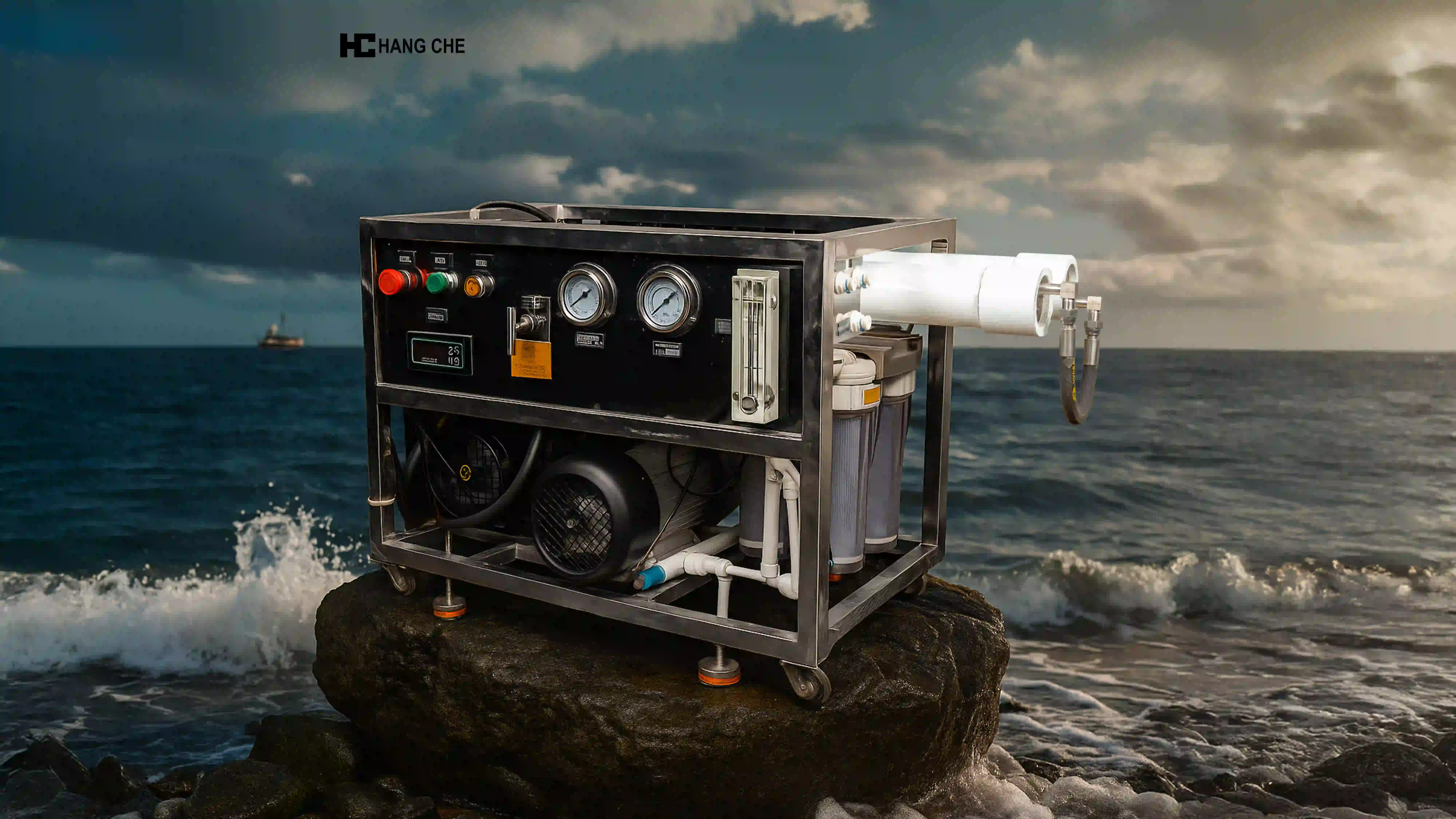
Seawater desalination is an important technology that helps convert seawater into fresh water safe for consumption. With the increasing demand for clean water, seawater desalination has become a modern solution to address the global water crisis.
What is Seawater Desalination and Its Brief History?
Seawater desalination is the process of removing salt and minerals from seawater to produce water suitable for drinking or industrial use. This technology dates back to the 4th century BC when the ancient Greeks tried heating seawater to obtain fresh water through steam condensation.
Why is Seawater Desalination Needed?
Seawater desalination is crucial because about 97% of the earth’s water is saltwater, which cannot be consumed directly. Meanwhile, the clean water crisis continues to worsen due to population growth and climate change. Therefore, seawater desalination plays a major role in providing alternative water sources in regions lacking fresh water.
Types of Seawater Desalination Technologies
-
Reverse Osmosis (RO)
The most popular seawater desalination method today, reverse osmosis uses high pressure to force seawater through a semipermeable membrane, filtering out salt and other dissolved substances. -
Multi-Stage Flash Distillation (MSF)
MSF involves heating seawater until it vaporizes, then condensing the steam back into fresh water. This technique is widely used in the Middle East. -
Electrodialysis and Other Technologies
Electrodialysis utilizes an electric current to separate salt ions from water. Other emerging technologies include forward osmosis and nanofiltration.
Working Process of Seawater Desalination Using Reverse Osmosis
-
Filtration and Pumping Stages
Desalination via reverse osmosis starts with pre-filtration to remove large particles. Then, a high-pressure pump pushes seawater through the RO membrane. -
RO Membrane and Its Function
The RO membrane has extremely small pores that only water molecules can pass through, while salt and other dissolved substances are retained. Units like the Hang Che SDU-2 2M3 Seawater Desalination Unit utilize high-quality RO membranes to produce purer water. -
Wastewater and Brine Management
The concentrated brine containing leftover salt is then discharged or managed following environmental standards to prevent marine pollution.
Advantages and Disadvantages of Seawater Desalination
-
Advantages of Seawater Desalination
Seawater desalination can provide a year-round source of clean water that does not depend on rainfall. This technology can also be scaled up or down depending on needs.
-
Challenges and Disadvantages
The drawbacks include relatively high energy costs and potential environmental impacts if brine waste is not properly treated. However, technological advances continue to reduce costs and improve efficiency.
Conclusion
Seawater desalination offers a solution to the scarcity of clean water around the world. By selecting the right technology such as reverse osmosis, the demand for potable water can be sustainably met. Make sure to choose quality desalination units from authorized dealers like Karya Logistik to receive warranty and the best after-sales service.